
Used-Oil Control, Monitoring, and Pickup Coordination
AFMS connects pump control, tank visibility, safety status, vendor pickup workflows, and documentation so used-oil operations stay controlled and visible.
Pump control with safety status
Tank level visibility
Operator green / yellow / red status
Vendor pickup workflow
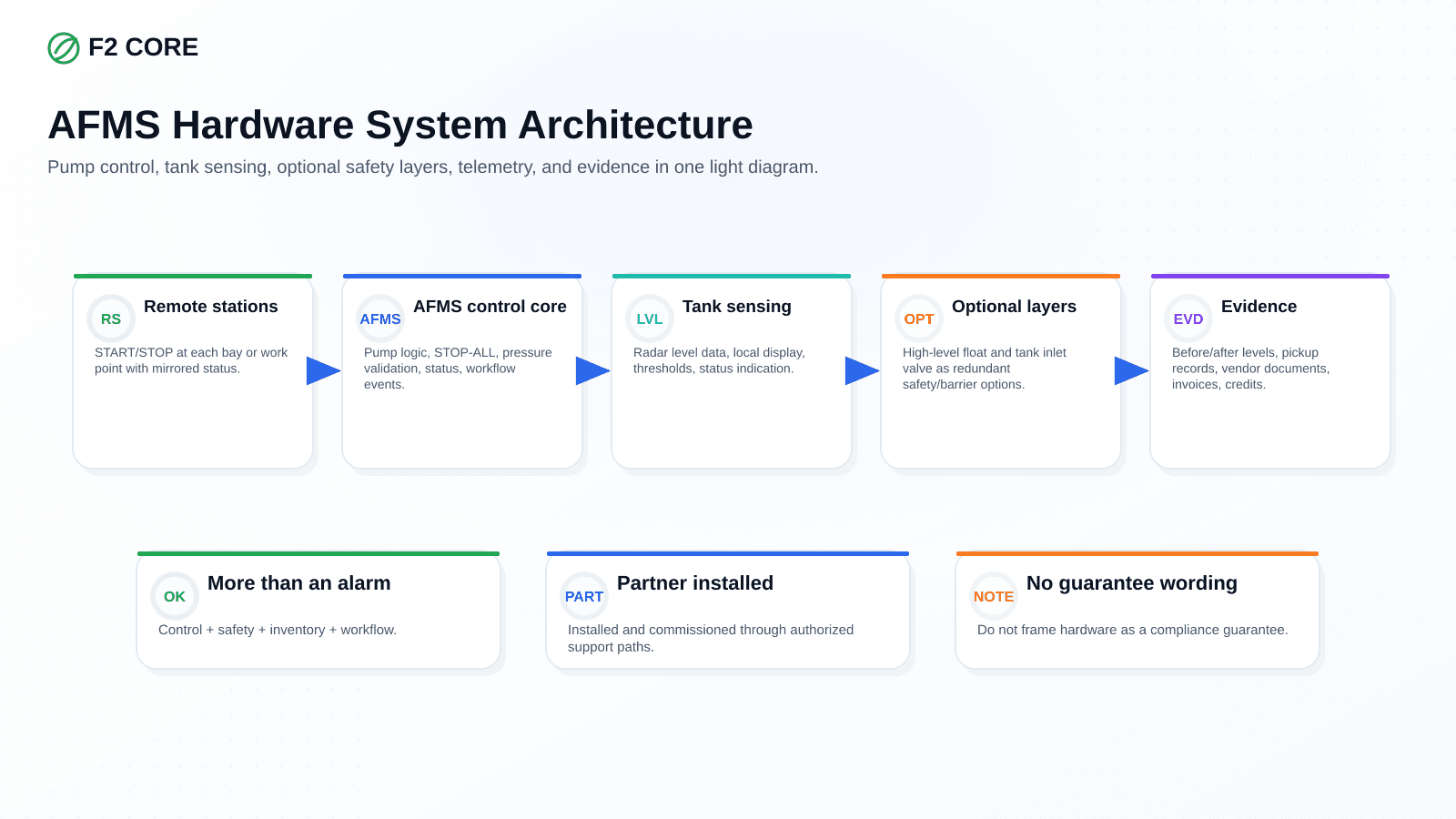
AFMS as an environmental used-oil control system. Remote start and stop stations, the AFMS control core, radar tank sensing, and optional redundant safety layers produce workflow events and evidence such as before-and-after levels, pickup records, vendor documents, invoices, and credits.
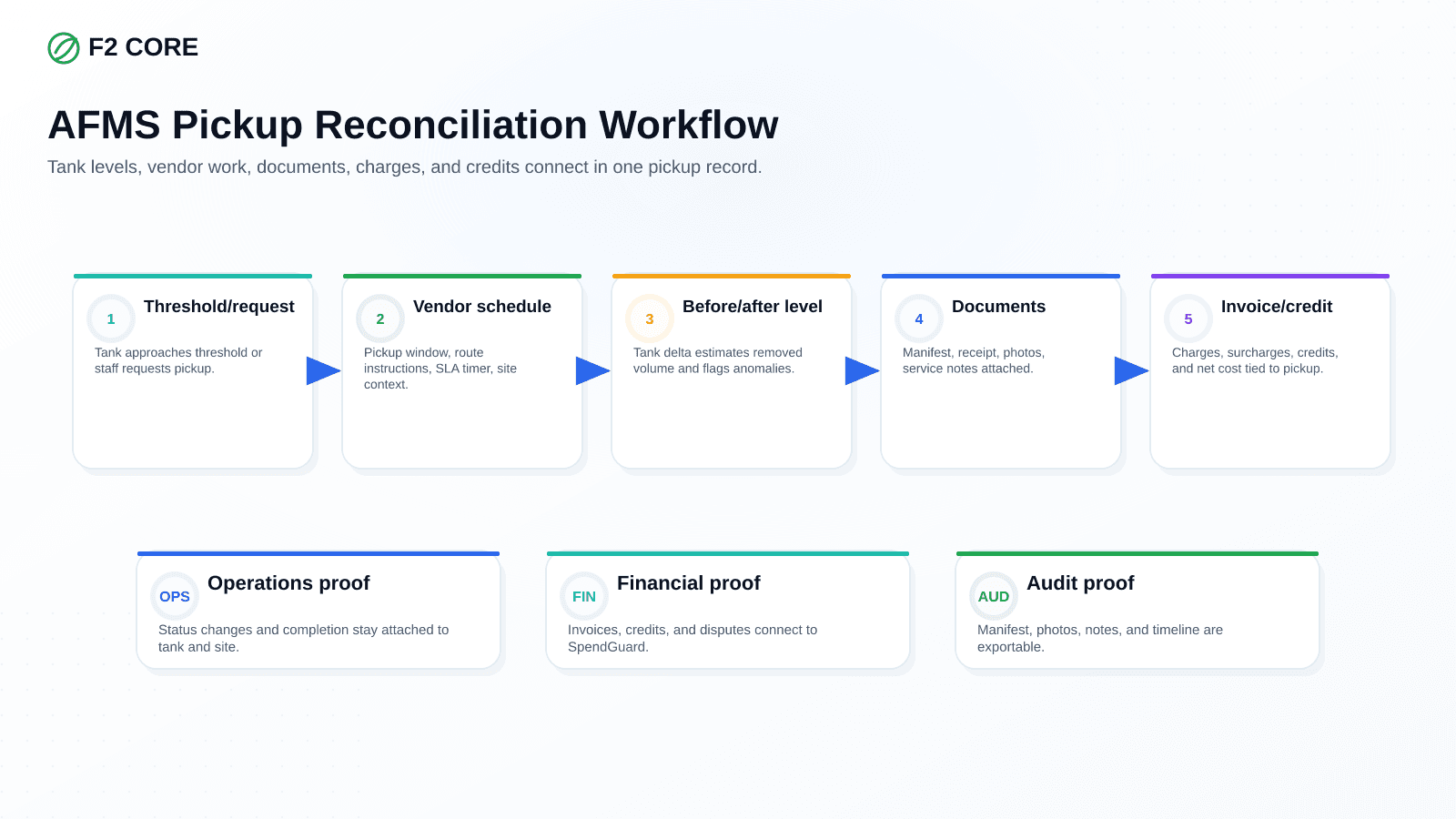
A used-oil pickup from a tank threshold or staff request through vendor scheduling, level reconciliation, document upload, charges or credits, and exportable operations, finance, and audit proof.

More than an alarm
AFMS is a control, safety, inventory, and workflow system. It provides used-oil operational visibility and helps teams coordinate pickups before they interrupt service operations.
Pump control
Control points for routine flow with overrides and safety stops.
Tank level visibility
Real-time tank visibility on the platform record and operator station.
Operator status
Green / yellow / red state surfaces what operators need to know with less guesswork — training reinforced by clear local status.
Vendor pickup workflow
Pickup requests, schedules, documents, charges, and credits tied to the tank.
Control at the point of work
Operators need clear status and simple stop controls. Workflows keep dealership teams informed throughout.
Capture the state
Tank level
Operator station status
Audible / visual alerts
Inspection support
Take the action
Remote start / stop stations
Global stop-all behavior
Pickup request
Vendor route
Keep the evidence
Before / after tank levels
Pickup completion notes
Document upload
Service history
Pickup reconciliation
When a vendor removes oil, the workflow connects before-and-after levels, estimated volume removed, pickup documents, charges, credits, and timeline history.
Before / after tank levels
Captured from connected tank monitoring where configured; manual assets use manual proof.
Pickup completion notes
Notes, photos, and exceptions recorded by the vendor or staff.
Document upload
Manifests, receipts, and other documents retained on the asset.
Service history
A complete pickup record by tank, site, and vendor.
Telemetry health, when telemetry is part of the workflow
Where AFMS is connected, the telemetry layer is monitored as its own surface. Stale data, missing strapping, calibration drift, or anomaly-rule failures surface before they create false alerts or missed pickups.
Device status + heartbeat
Last heartbeat, device online/offline, polling cadence, and last-reading timestamp per asset.
Strapping table check
Tank strapping required for reconciliation; missing strapping disables reconciliation rather than producing bad numbers.
Threshold validation
Configured thresholds validated against tank capacity; out-of-range thresholds flag setup before publish.
Duplicate / stale suppression
Repeat events and stale data are suppressed; the workflow shows the suppression reason for audit.
Anomaly rules
Threshold-based anomaly rules at MVP scope. Advanced leak / anomaly detection is Phase 2 unless validated for the site.
Data quality flags
Calibration drift, sensor errors, and communication failures surface as workflow exceptions, not silent gaps.
Installed through partners
AFMS reinforces the dealer and installer model. Customers should be routed to authorized partners for installation, commissioning, and support.
Environmental compliance disclaimer
F2 Core supports environmental workflows, organization, documentation, and evidence readiness. It is not a substitute for legal advice or a qualified environmental compliance review.
Ready to bring used-oil work into one record?
Walk through a dealership-specific AFMS workflow from threshold to closeout.